
Pull It When the Door Is Down. Be Careful When It's Up.
The emergency release cord — that red handle hanging from a track near the top of your garage door — disconnects the door from the opener's trolley so you can move the door by hand. Pull it when the opener has failed and the door is closed, or safely supported, and you need to get it open manually. Don't pull it while the door is standing open and nothing else is holding it up. Once the trolley disconnects, the only thing keeping an open door from falling is spring tension. If a spring is weak, cracked, or already snapped, releasing the cord lets the full weight of the door drop with no warning.
What the Cord Is Actually Doing
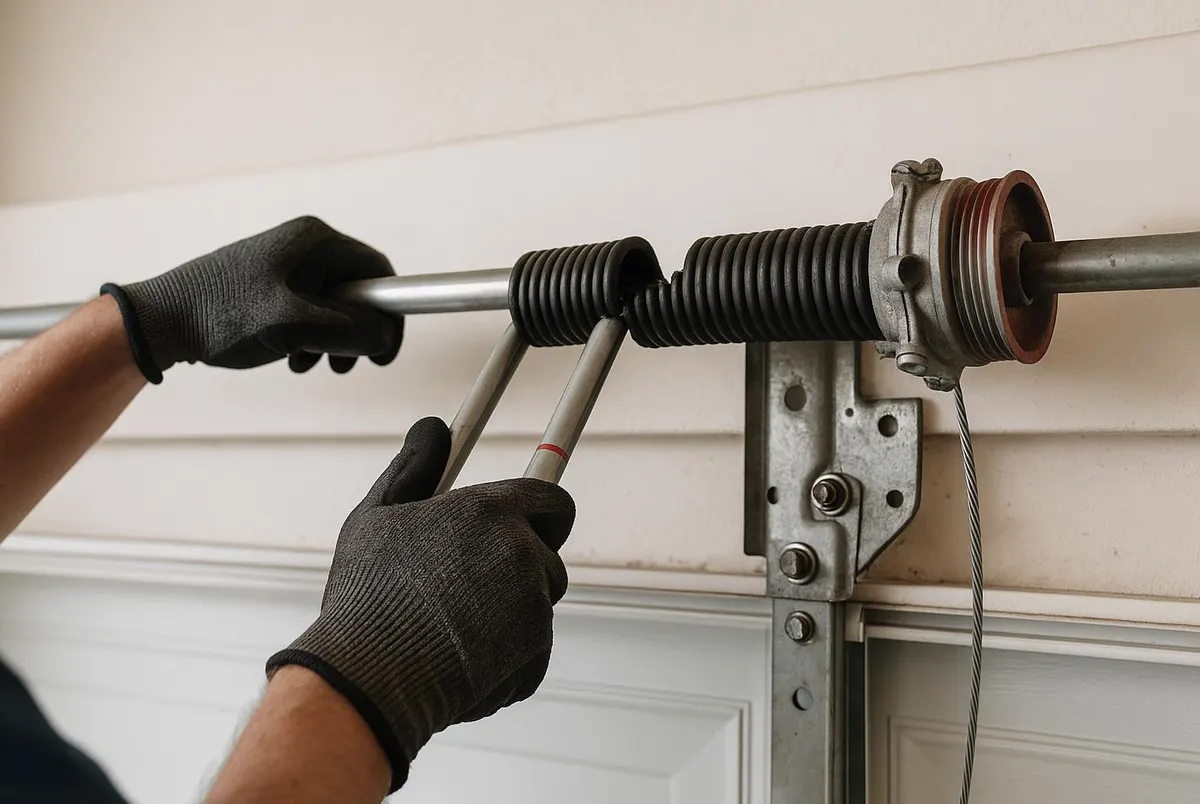
Your opener doesn't lift the door on its own — the springs do almost all of that work, whether they're a torsion spring above the door or extension springs along the horizontal tracks. The opener's job is just to carry the door along once the springs have taken the weight off. The release cord unhooks the trolley (the part that rides the opener's rail) from the carriage attached to the door. Pull it, and you've turned a motorized door into a manual one — which means the door now behaves exactly as well, or as badly, as its springs allow.
When Pulling the Cord Is the Right Call
- Power is out and the door is closed. Ice storms and downed lines are common enough here that most homeowners eventually need to get a car out without power. With the door down, disconnecting the opener and lifting by hand is the intended use.
- The opener has failed mechanically — a stripped gear, a dead circuit board, a motor that hums but won't turn — and the door itself still opens and closes smoothly by hand.
- You're doing a balance check as routine maintenance (more on that below), not as an emergency fix.
When Pulling the Cord Makes Things Worse
The dangerous version of this story almost always starts the same way: the door is open, the opener stops responding, and someone pulls the cord assuming it will let them close the door safely by hand. If the spring system is already compromised, that's the moment it fails completely.
Watch for these warning signs before you ever touch the cord on an open door:
- A loud bang from the garage in the past — that's often a torsion spring snapping, even if the door still appeared to work afterward.
- The door looks crooked or uneven when it's partway open.
- The opener strains, grinds, or runs slower than it used to.
- The door won't hold still when stopped halfway — it either creeps down or drifts up.
Any of these means the springs are no longer doing their job correctly. If the door is open and showing these symptoms, leave the opener connected and call for help rather than releasing the trolley.
How to Actually Check Before You Pull
- Close the door with the opener first, if it's at all functional, before involving the cord. This avoids the whole open-door scenario.
- If the door is already stuck open and you must disconnect it, support it first — a pair of locking pliers clamped onto the track just below the bottom roller on each side will catch the door if it drops.
- Test balance only when the door is closed. Pull the cord, lift the door by hand to about waist height, and let go. A properly balanced door stays put. If it slams down or shoots upward, the springs are out of adjustment and the door isn't safe to operate manually.
- Reconnect correctly by guiding the trolley back onto the carriage and pulling the cord in the opposite direction (or using the opener, which usually re-engages it automatically) until you hear it click into place.
Why This Matters More Here Than in Milder Climates
Cold winters bring both the scenario and the risk together. Ice storms cause the power outages that send people to the emergency cord in the first place, and the same cold snaps add stress to torsion springs that are already fatigued from a humid summer and a full season of temperature swings. Salt and ice buildup on the tracks can also stiffen manual movement enough to mask an unbalanced door — it feels heavy because of the ice, not just the spring. That's part of why a fall balance check, before the first hard freeze, catches problems while they're still a minor adjustment instead of a dropped door during a January outage.
When to Call Lockport Garage Door
If your door drops, jumps, or feels uneven when you test it manually, stop operating it and call. A torsion spring under tension is not a safe DIY repair — the stored force is enough to cause serious injury. Our Spring Repair & Replacement service includes checking both springs (they should always be replaced in matched pairs), the cables, and the tracks for any storm or ice damage, then rebalancing the door before the opener goes back into service. If the issue hits during a power outage or after hours, our Emergency Garage Door Service covers exactly this kind of situation — getting your door safely operational again without guesswork.
If your garage door isn't behaving the way it should, don't wait for an outage to find out why. Call Lockport Garage Door — serving Lockport, Plainfield, Joliet, Romeoville, Bolingbrook, Lemont, Homer Glen, and New Lenox — and get it checked before winter puts it to the test.